
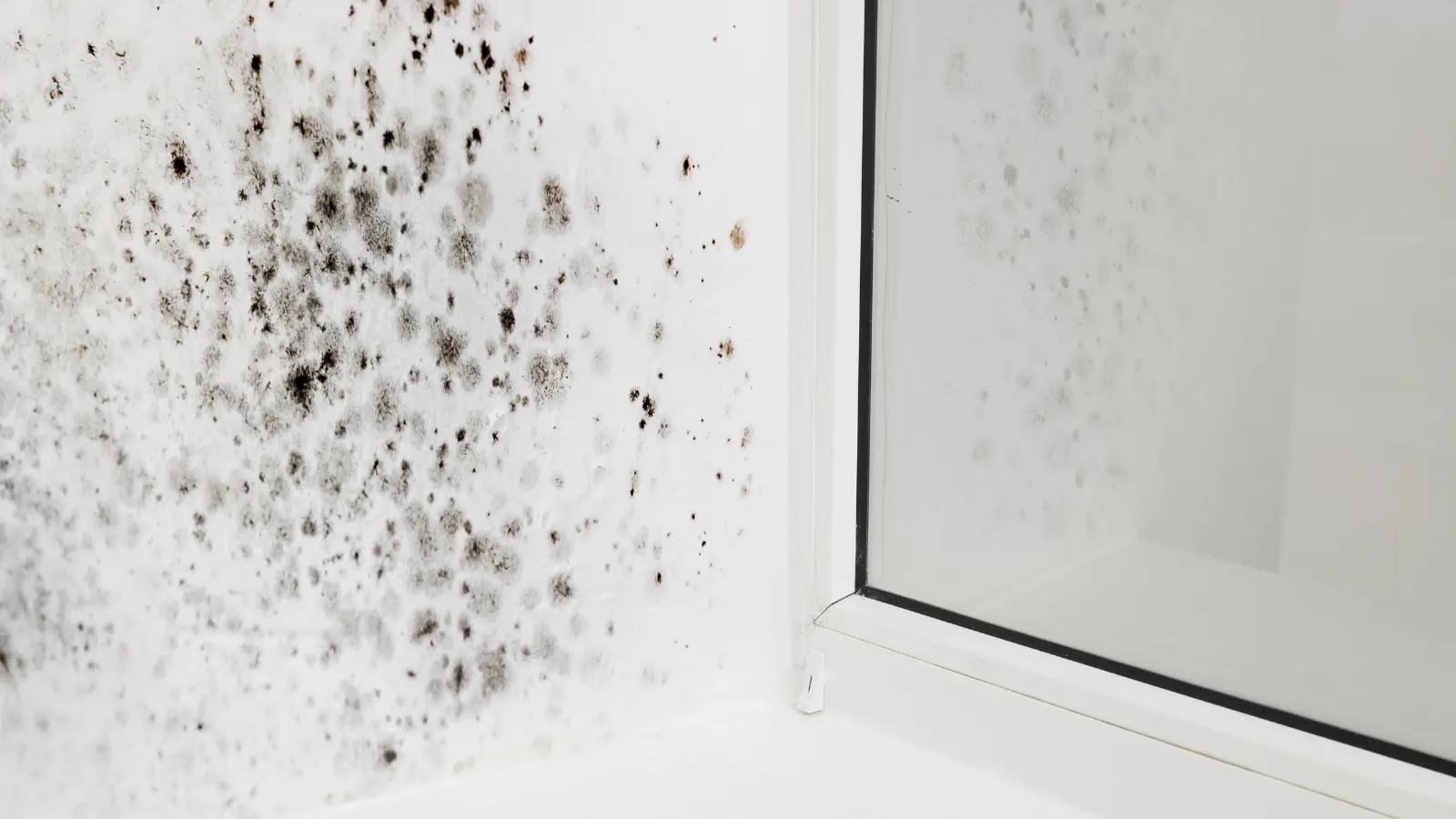
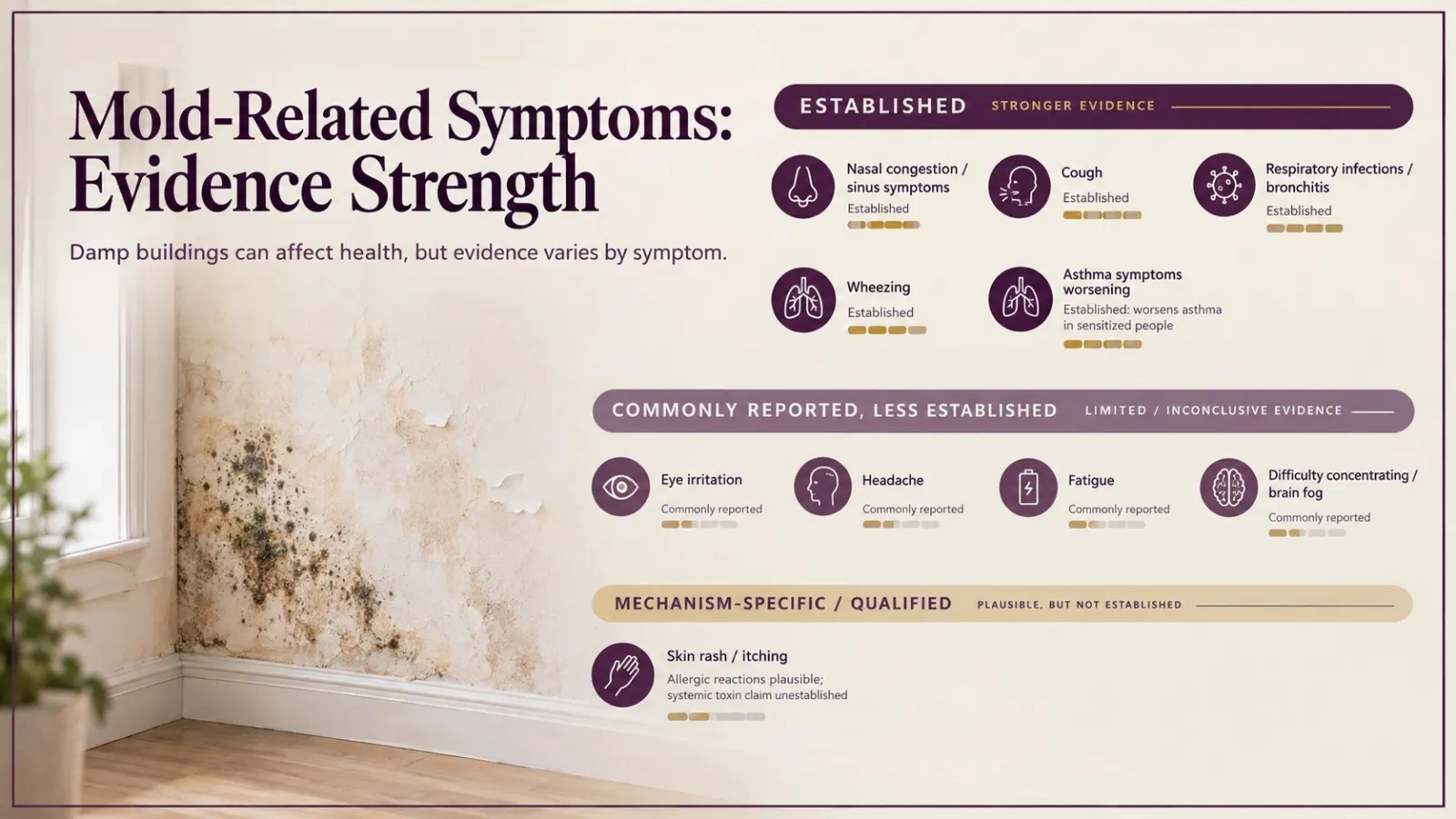
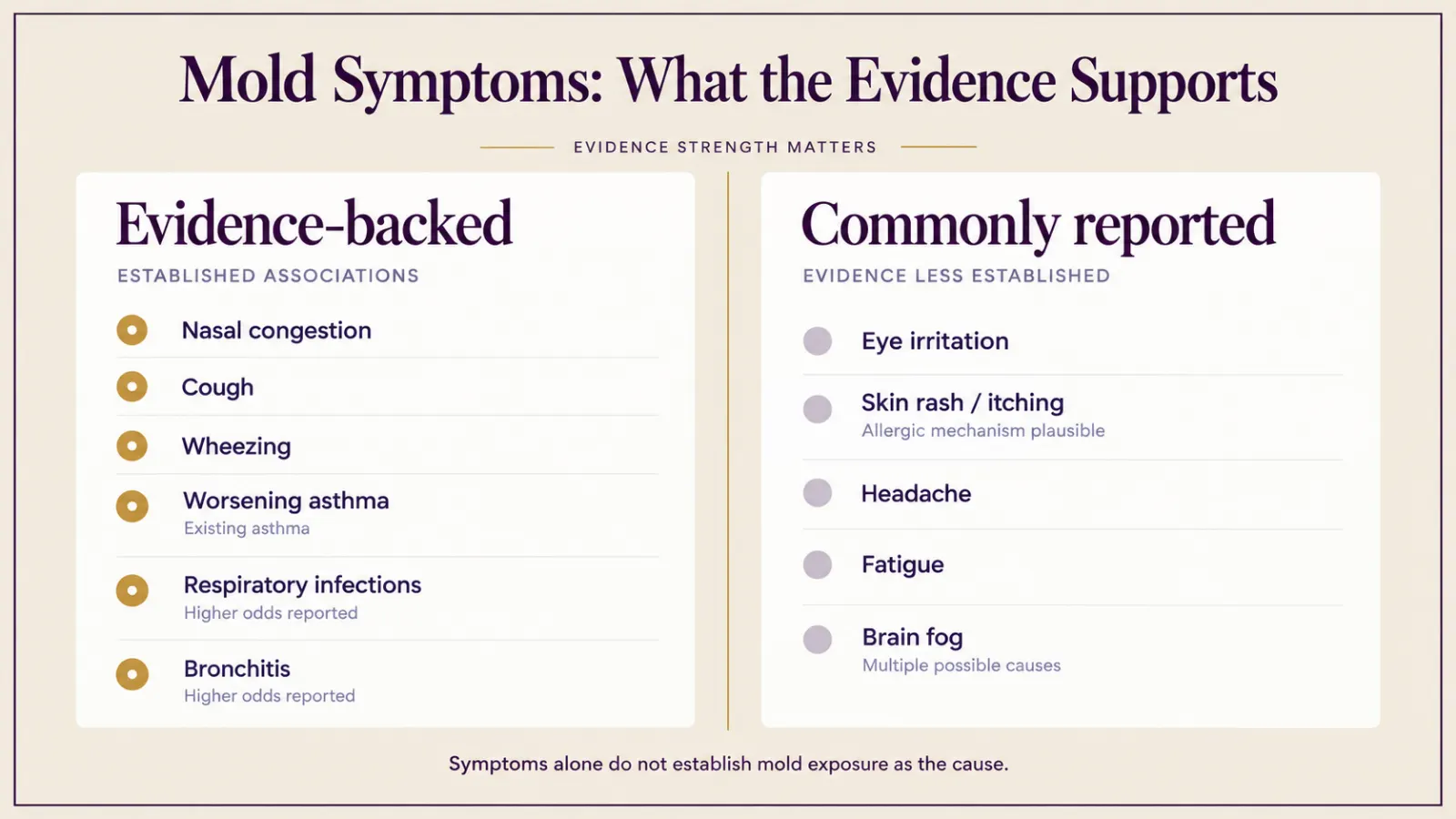
The warning signs of mold toxicity most often reported are nasal and sinus congestion, cough, wheezing, throat irritation, eye irritation, skin rash, headache, fatigue, difficulty concentrating, and worsening asthma. What almost no article tells you is that these signs do not carry equal evidence. Some are strongly supported by research on damp indoor environments. Others are widely reported by patients but not established in the literature. Knowing which is which changes what you should do next, because it determines whether the answer is fixing a building, treating an allergy, or looking for a different cause entirely. This guide gives the ten signs and grades each one honestly.
Key Takeaways
- Upper respiratory symptoms, cough, wheeze, and asthma flares in sensitized people have sufficient evidence linking them to damp indoor environments.
- Fatigue, brain fog, and headache are commonly reported by patients but are not established in the research the same way.
- Living in a damp or moldy home is associated with roughly 44% higher odds of respiratory infections and bronchitis.
- Symptoms that improve when you leave the building and return when you go back are the single most useful clue.
- There is no FDA-approved urine test for mycotoxins, and mycotoxins appear in the urine of healthy people.
- The first step is inspecting the building, not testing your body.
The number one search result for this question is published by a company that removes mold from buildings.
That is worth sitting with. Much of what is written about mold and health online comes from remediation contractors and restoration firms, with no clinician involved and no sources cited. The symptoms they list are not invented. They are simply presented without any indication of which ones the evidence supports. Because mold and biotoxin illness overlaps with several other conditions, that distinction changes what you should do next.
What Mold Toxicity Means, and Why the Term Is Contested
Mold toxicity is a popular term rather than a formal diagnosis, and the distinction matters.
Damp indoor environment exposure describes health effects associated with dampness, visible mold, or water damage in a building. This is the framing used in the research literature, because dampness itself, rather than any single mold species, is what studies consistently measure.
The Institute of Medicine’s 2004 report Damp Indoor Spaces and Health remains the reference point. It reviewed the evidence and sorted health outcomes by how well each was supported. That grading is what the list below is built on, and it is the part almost every competing article leaves out.
The 10 Warning Signs, Graded by Evidence
Each sign below carries a note on what the research supports.
1. Nasal congestion and sinus symptoms
Evidence: established. The IOM found sufficient evidence of an association between damp indoor environments and upper respiratory tract symptoms. Congestion, runny nose, and postnasal drip are the most consistently reported effects. The pattern worth noticing is timing: symptoms that ease on holiday and return within days of coming home point at the building.
2. Cough
Evidence: established. Cough is one of the outcomes the IOM graded as having sufficient evidence. A persistent dry cough with no infection behind it, in someone living or working in a damp space, is a reasonable reason to inspect that space.
3. Wheezing
Evidence: established. Also graded sufficient. Wheeze in an adult with no history of it deserves attention regardless of cause, and a damp building is one explanation worth ruling in or out.
4. Asthma symptoms getting worse
Evidence: established, with an important limit. The IOM found sufficient evidence that damp environments worsen asthma symptoms in people who already have asthma and are sensitized. It found the evidence inadequate for damp environments causing asthma in someone who did not have it. That is a real distinction, and it is regularly blurred.
5. Eye irritation
Evidence: commonly reported, less firmly established. Burning, watering, or itchy eyes are frequently described. The IOM classed mucous membrane irritation syndrome as having inadequate evidence, so treat this as a signal to investigate rather than a finding.
6. Skin rash or itching
Evidence: allergic mechanism plausible, systemic mechanism not established. Contact and allergic reactions to mold are real in sensitized people. Rash attributed to circulating mold toxins is a different claim and is not supported.
7. Recurrent respiratory infections and bronchitis
Evidence: established, with numbers. A meta-analysis in Environmental Health found residential dampness and mold associated with an odds ratio of 1.45 for bronchitis and 1.44 for respiratory infections, rising to 1.48 in children and infants. In plain terms, roughly 44% to 48% higher odds. This is one of the strongest quantified links available.
8. Headache
Evidence: commonly reported, not established. Headache appears on nearly every list of mold symptoms and does not appear in the IOM’s sufficient-evidence category. It may still be relevant for you. It is not something a clinician can attribute to mold with confidence on its own.
9. Fatigue
Evidence: commonly reported, not established. The same applies. Fatigue is the symptom that brings most people to search this topic, and it has many causes worth excluding first, including thyroid function, iron stores, sleep disorders, and blood sugar regulation.
10. Difficulty concentrating and brain fog
Evidence: commonly reported, not established. Cognitive complaints are frequently described in damp-building contexts. They are also produced by poor sleep, which damp-building respiratory symptoms readily cause. Untangling that requires a proper history rather than an assumption.
The Pattern That Matters More Than Any Single Symptom
Timing tied to a place is the most useful clue available to you.
If symptoms lift within a few days away from a building and return within days of going back, that pattern is worth more than any individual symptom on the list. It is also worth more than most tests. Ask whether anyone else in the building, including pets, developed similar symptoms in the same period. Ask whether the onset lines up with a leak, a flood, a roof problem, or a new humidifier.
Dr. Angela Goldstein describes symptoms as signals from connected systems rather than isolated problems, which is why the sequence of events usually tells more than the symptom list does.

Free training from Dr. Angela Goldstein, ND
If you feel better away from home or work and worse when you return, this free training shows how environmental exposures, inflammation and hormones interact.
When you watch today, you’ll learn:
- ✓Why “normal” labs can miss what is actually wrong
- ✓The three systems that break down together, and why treating one at a time rarely lasts
- ✓Why even natural approaches fall short when they treat symptoms instead of systems
- ✓Real patient stories from 25+ years of practice
Free, instant access. Start watching right now.
Educational content. Always talk with your doctor before changing any treatment.
What Mold Testing Can and Cannot Tell You
Start with the building, not the body, because that is where the reliable information is.
Hypersensitivity pneumonitis is an immune reaction in the lungs to inhaled organic material, and it is one of the few specific conditions the IOM graded as having sufficient evidence of association with mold and bacteria in damp indoor spaces.
Visual inspection and moisture measurement come first. If there is visible mold or a known water intrusion, that is actionable information and it does not require a laboratory. Where a clinical evaluation is warranted, what an evaluation involves is worth understanding before booking any panel.
On testing your body, the honest position is uncomfortable but important. The CDC reported in MMWR that there is no FDA-approved test for mycotoxins in human urine. It also found that mycotoxin levels which predict disease have not been established. Because low levels of mycotoxins occur in many foods, mycotoxins are found in the urine of healthy people. The CDC does not recommend biological testing of people in water-damaged buildings.
That does not mean nothing can be evaluated. Allergy testing for mold sensitization is established, as is looking at the ordinary causes of your symptoms. What it means is narrower: a urine panel cannot confirm mold made you ill. A practitioner presenting one as proof is overstating what it shows.
When Your Symptoms Are Probably Something Else
Several conditions produce this exact symptom set and are more common.
| If your main symptom is | Also consider |
|---|---|
| Fatigue and brain fog | Thyroid dysfunction, low iron stores, sleep apnea, blood sugar dysregulation |
| Congestion and sinus pressure | Ordinary allergic rhinitis, chronic sinusitis, structural nasal issues |
| Cough and wheeze | Asthma, reflux, post-viral airway sensitivity |
| Headache | Sleep disruption, dehydration, medication effects, primary headache disorders |
| Rash | Contact dermatitis, eczema, drug reaction |
Working through these is not a detour. It is how a mold contribution gets established rather than assumed, and it protects you from treating the wrong thing for months. Several overlap with the conditions we work with most, and sorting them apart is what a full history is for.
What to Do Next
Five steps, in this order.
- Inspect the building. Look for visible mold, water staining, musty odor, and past leaks. Check under sinks, around windows, and in basements and crawl spaces.
- Test the timing. Record symptoms for two weeks, noting where you were. A pattern tied to a location is your strongest evidence.
- Fix the moisture. Remediation without addressing the water source does not hold. This is a building problem before it is a medical one.
- See a clinician about the symptoms themselves. Wheeze, worsening asthma, and recurrent infections need proper evaluation regardless of cause.
- Rule out the common alternatives. Functional lab testing for thyroid, iron, and metabolic markers answers a different question than a mold panel, and usually a more useful one.
The building history and the symptom timeline are the two things worth bringing to any appointment. More answers patients ask for cover what an evaluation involves.
When to Seek Medical Care Promptly
Some symptoms need attention now rather than investigation over weeks.
Seek prompt care for difficulty breathing, chest tightness, a significant asthma flare, coughing up blood, or fever with breathlessness. People who are immunocompromised, have chronic lung disease, or are receiving cancer treatment face a genuinely higher risk from mold exposure and should speak to their physician early rather than working through a checklist.
Frequently Asked Questions
These are the questions patients ask most about mold and symptoms.
How long does it take for mold exposure to cause symptoms?
In sensitized people, allergic and respiratory symptoms can begin within hours of exposure. Effects tied to prolonged dampness, such as recurrent infections, build over months. Researchers do not know how much exposure is required to cause problems, and it varies considerably between people.
Can mold cause fatigue and brain fog?
Both are commonly reported by people in damp buildings, and neither is established in the research the way respiratory symptoms are. They are worth investigating rather than dismissing, alongside the more common causes of fatigue.
What is the difference between mold allergy and mold toxicity?
Mold allergy is a well-characterized immune response to mold, diagnosable with standard allergy testing. Mold toxicity is a broader popular term for systemic illness attributed to mold, and it lacks an agreed definition or validated test.
Do I need to leave my home?
Not usually. The priority is finding and fixing the moisture source and remediating properly. If symptoms are severe or you are immunocompromised, discuss temporary relocation with your physician while the work is done.
Will my symptoms resolve after remediation?
Respiratory and allergic symptoms often improve once exposure ends, though timelines vary. Symptoms that persist well after a building is genuinely dry are a reason to look for another cause rather than to assume ongoing mold effects.
Where to Start
If your symptoms track with a building, bring two things to any appointment: the building history and a two-week symptom log with locations. Dr. Goldstein’s free Master Class explains how she reads several findings as one picture rather than as separate complaints.
Start with the free Master Class.
By Dr. Angela Goldstein, ND, licensed naturopathic doctor, 25+ years in practice. Last reviewed: 2026-09-16. This article is for general education and is not medical advice. It does not establish a doctor-patient relationship and is not a substitute for care from your own clinician. Do not delay seeking care, and do not stop or change any prescribed medication, based on what you read here. If you have an urgent medical concern, contact your physician or emergency services.