
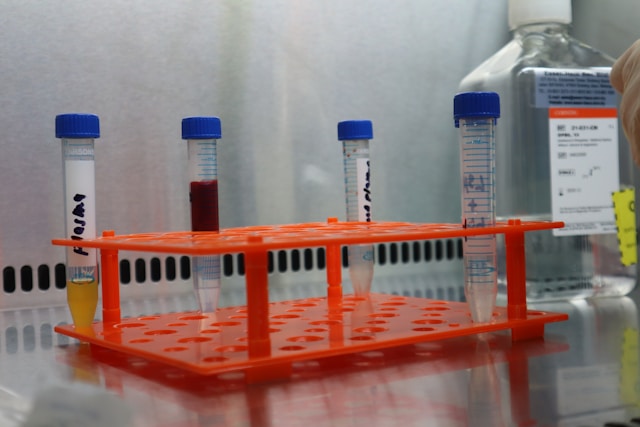
You went to your doctor. You did the bloodwork. You followed up. And you were told the same thing you have heard before: everything is normal.
But you are exhausted. Your thinking is foggy. Your weight is shifting without explanation. You are sleeping but not resting. Something is off — and you know it, because you remember what feeling like yourself actually felt like, and this is not it.
If that is your experience, you are in good company. It is one of the most common reasons patients come to The Natural Path in San Juan Capistrano, and it is one of the most important problems that naturopathic medicine is specifically equipped to address.
This blog explains what standard lab testing is actually designed to catch, why it regularly misses meaningful hormonal and metabolic dysfunction, and what a more comprehensive, root-cause evaluation can reveal that your annual bloodwork cannot.
What Are Standard Lab Ranges Actually Measuring?
Standard reference ranges in conventional medicine are built from population averages. They are calibrated to identify values that are statistically abnormal enough to indicate disease. The question they answer is: does this result fall outside the range typical of a general population?
That is a useful question if the goal is catching serious illness. It is a limited question if the goal is understanding why a functioning, motivated adult feels consistently unwell despite doing everything right.
The result is a gap that frustrates patients and their doctors alike. You are not sick enough to trigger a diagnosis. You are not well enough to feel functional. Your labs say one thing. Your body says another.
This is not a problem with you. It is a limitation of what standard testing was designed to do.
Why Can You Feel Terrible with Normal Thyroid Labs?
Thyroid dysfunction is one of the most frequently missed root causes in patients presenting with fatigue, brain fog, weight changes, and cold sensitivity. Standard thyroid testing typically measures TSH alone, and sometimes total T4. That is often not enough.
TSH measures the signal your brain sends to the thyroid — not how well the thyroid is actually responding, and not how efficiently your body is converting thyroid hormones into their active, usable form. Free T3, which is the thyroid hormone your cells actually rely on for energy production, is absent from most routine panels. Reverse T3, which can block thyroid activity even when other markers appear acceptable, is rarely ordered. Thyroid antibodies — the earliest indicator of autoimmune thyroid disease — are also omitted from most standard workups.
A person can have a TSH that falls comfortably within the normal range and still be experiencing meaningful thyroid underfunction that drives persistent fatigue, stubborn weight gain, hair thinning, and cognitive slowness. Without the full picture, that dysfunction goes unrecognized.
Why Do Hormone Labs Look Normal When Symptoms Are Clearly Present?
Estrogen, progesterone, and testosterone are often dismissed with a single sentence: your hormones are fine. But hormone status is not simply a matter of whether individual values fall within a reference range. It is about the relationships between those values, the timing of when they were tested, and the context of what symptoms are present.
Progesterone is typically the first hormone to decline as women move through their late 30s and into perimenopause. When progesterone drops while estrogen remains relatively elevated, the result is a hormonal imbalance that drives anxiety, sleep disruption, PMS, and heavy cycles — even when each individual value appears acceptable in isolation.
Sex hormones tested at the wrong point in the menstrual cycle can appear completely unremarkable while the patient is experiencing significant hormonal fluctuation the rest of the month. A single snapshot blood draw does not capture a pattern.
Testosterone in women is rarely tested at all in conventional medicine. Low testosterone in women contributes meaningfully to fatigue, loss of motivation, reduced mental clarity, and diminished libido — and it is almost never evaluated.
What Does Cortisol Have to Do with Fatigue and Hormonal Symptoms?
Cortisol is the body’s primary stress hormone, produced by the adrenal glands. Under chronic stress, cortisol output becomes dysregulated — but the standard approach to cortisol testing, when it happens at all, is a single morning blood draw. That single data point tells you very little about how cortisol behaves across the full day.
A comprehensive cortisol assessment maps output across four time points throughout the day, revealing rhythm and output patterns that a single draw cannot detect. Patients with disrupted cortisol patterns often describe a paradox: they are exhausted but cannot sleep, or they cannot function in the morning regardless of how many hours they spent in bed. These are clinical presentations that point to a cortisol rhythm problem — not simply a sleep problem or an energy problem in isolation.
Cortisol dysregulation also directly affects thyroid function, sex hormone production, blood sugar regulation, and immune response. Addressing fatigue without evaluating the cortisol pattern means treating a symptom while leaving a major driver intact.
Why Are Nutrient Levels Often “Normal” but Still Contributing to Symptoms?
Vitamin D, B12, iron, ferritin, and magnesium are among the most common nutrient deficiencies contributing to fatigue, brain fog, mood instability, and hormonal symptoms. Standard labs often include some of these markers. The issue is that the reference ranges applied are built for disease detection — not optimal function.
A vitamin D level of 32 ng/mL is technically within normal range. The research on optimal vitamin D for immune function, mood regulation, and hormonal health, however, points consistently to levels considerably higher than what conventional thresholds require. A B12 result in the low-normal range may still contribute to neurological symptoms and cognitive impairment. Ferritin levels that avoid a diagnosis of anemia can still be low enough to drive significant fatigue and hair loss.
The threshold for “normal” and the threshold for “optimal” are not the same number. That distinction is central to how Dr. Goldstein interprets results — and it is what makes a meaningful difference for patients who have been told their levels are fine.

Free 3-minute quiz from Dr. Angela Goldstein, ND
Stress, thyroid and sex hormones work as one system. Answer 22 quick questions and see which one is under the most strain for you.
What you’ll get:
- ✓A score for each system: stress, thyroid and sex hormones
- ✓Which pattern your answers fit, and how the systems pull on each other
- ✓Built on published research
- ✓A clear next step for your pattern
Free. 22 questions, about 3 minutes.
Educational content. Always talk with your doctor before changing any treatment.
What Does a Functional Naturopathic Evaluation Actually Include?
When Dr. Angela Goldstein evaluates a patient at The Natural Path who has been told their labs are normal, the workup goes considerably further than a standard panel.
A comprehensive evaluation typically includes a full thyroid panel covering TSH, free T3, free T4, reverse T3, and thyroid antibodies. Sex hormone testing with appropriate attention to cycle timing, covering estradiol, progesterone, testosterone, and DHEA. Cortisol mapping across four daily time points to identify rhythm and output patterns. Blood sugar and insulin markers beyond a fasting glucose alone, including fasting insulin and hemoglobin A1c where clinically indicated. Nutrient assessment for vitamin D, B12, ferritin, magnesium, and other markers relevant to each patient’s specific symptom picture. Inflammatory markers where chronic inflammation is a contributing factor.
This level of testing does not look for what is wrong with you in the conventional sense. It builds a complete functional picture of how your systems are actually operating — so that the care plan addresses the real drivers of how you feel, not just the symptoms that are most visible.
Who Is Most Likely to Benefit from a Deeper Evaluation?
The patients who tend to gain the most clarity from a comprehensive naturopathic workup are those who have seen multiple providers without resolution, who have tried supplements or medications with partial or temporary results, and who are living with symptoms that affect their daily quality of life while being reassured that nothing is wrong.
This includes working professionals in their 30s through 60s managing demanding schedules while experiencing declining function. It includes caregivers and parents who have placed their own health at the bottom of the list for years. It includes people who expected to feel better in this phase of life and instead find themselves feeling worse. And it includes anyone who knows, with certainty, that their body is not working the way it should — regardless of what the paperwork says.
What Should You Do if You Keep Being Told Your Labs Are Normal?
If your labs are consistently returning as normal while your symptoms persist, that is not the end of the diagnostic process. It is a signal that the diagnostic process has been insufficient for your situation.
The right next step is a naturopathic evaluation that takes your full symptom picture seriously, orders comprehensive testing appropriate to your presentation, and interprets results through the lens of optimal function rather than disease detection alone.
That is the standard of care at The Natural Path. It has been from the beginning.
FAQ: Normal Labs, Functional Testing, and Root-Cause Evaluation
Q: Can I feel this unwell if my labs are completely normal?
Yes. Standard reference ranges are calibrated to identify disease-level dysfunction, not to assess optimal hormonal or metabolic function. Many patients with significant fatigue, brain fog, and hormonal symptoms have lab results that fall within normal range — either because the right markers were never tested, or because the thresholds used are not designed for optimal health.
Q: What is the difference between a standard blood panel and functional lab testing?
A standard panel uses population-based reference ranges to screen for disease. Functional lab testing uses expanded panels, optimal ranges, and pattern interpretation across multiple markers to assess how well your systems are actually working together — rather than whether any individual value is extreme enough to flag.
Q: Why does my doctor not order more comprehensive labs?
Conventional medicine is structured around disease detection and insurance reimbursement. Comprehensive functional panels often fall outside what is reimbursable, and practitioners trained in conventional medicine may not have training in functional interpretation. This is not a failure of your doctor. It is a structural limitation of the system they work within.
Q: What thyroid tests are most commonly missed?
Free T3, reverse T3, and thyroid antibodies are the most frequently omitted. TSH alone is a poor indicator of how thyroid hormones are actually functioning at the cellular level.
Q: How do I know if my hormones are out of balance if my standard labs look fine?
Symptom pattern, timing relative to the menstrual cycle, and the relationships between hormones are as important as individual values. A comprehensive naturopathic evaluation looks at the full picture — including how estrogen, progesterone, cortisol, and thyroid hormones interact with each other — rather than assessing each marker in isolation.
Q: Can cortisol problems cause the same symptoms as thyroid problems?
Yes. Fatigue, brain fog, weight changes, sleep disruption, and mood instability are common to both adrenal dysregulation and thyroid dysfunction — and they frequently co-occur. This is why evaluating both together, rather than in isolation, produces a more accurate picture and a more effective care plan.
Q: Are nutrient deficiencies really enough to cause major fatigue and brain fog?
Yes. Iron, ferritin, B12, vitamin D, and magnesium deficiencies are among the most common and most overlooked contributors to persistent fatigue and cognitive symptoms. Standard testing often includes these markers but applies reference ranges that do not reflect optimal function — which means deficiencies at the functional level regularly go unaddressed.
Q: Can men have the same experience of normal labs with ongoing symptoms?
Yes. Testosterone decline, cortisol dysregulation, thyroid underfunction, and nutrient depletion affect men and women alike and are frequently underinvestigated in male patients. The symptom picture in men often includes fatigue, loss of motivation, mood changes, reduced cognitive sharpness, and unexplained weight gain.
Q: How long does it take to start feeling better once root causes are identified?
Most patients begin noticing meaningful shifts within the first month of a comprehensive care plan. How quickly and completely things improve depends on what is driving the symptoms — which is precisely what the evaluation is designed to clarify. Full restoration of hormonal and metabolic function is a process that unfolds over months of consistent, individualized work.
Q: Where is The Natural Path located?
The Natural Path is located at 27136 Paseo Espada, Suite 123, San Juan Capistrano, California 92675. Dr. Angela Goldstein also offers virtual consultations for patients throughout California.
Q: How do I get started?
The best first step is watching the free introductory webinar at ndnaturalpath.com. This explains Dr. Goldstein’s approach, what to expect from an initial evaluation, and how the care model at The Natural Path differs from conventional medicine.
You Have Done the Bloodwork. Now It Is Time to Do It Right.
If you have been told your labs are normal while continuing to live with fatigue, brain fog, hormonal symptoms, or a general sense that your body is not working the way it used to, you deserve a more complete answer.
Dr. Angela Goldstein at The Natural Path in San Juan Capistrano works with patients who have been searching for answers for months to years. The evaluation is thorough, the interpretation goes deeper than a reference range, and the care plan is built around your actual physiology.
Start with the free webinar here.
By Dr. Angela Goldstein, ND, licensed naturopathic doctor, 25+ years in practice. Last reviewed: 2026-09-16.
This article is for general education and is not medical advice. It does not establish a doctor-patient relationship and is not a substitute for care from your own clinician. Do not start, stop or change any prescribed medication based on what you read here. If you have an urgent medical concern, contact your physician or emergency services.